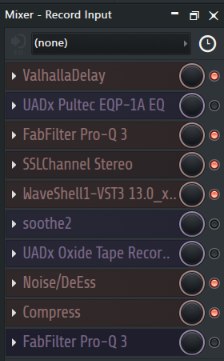
The Ultimate Atlanta Vocal Chain · Deep Dive
Every slot, every setting, and why it's there. The Quick Start gets you recording tonight. This one is for the nerds.
How to read this guide
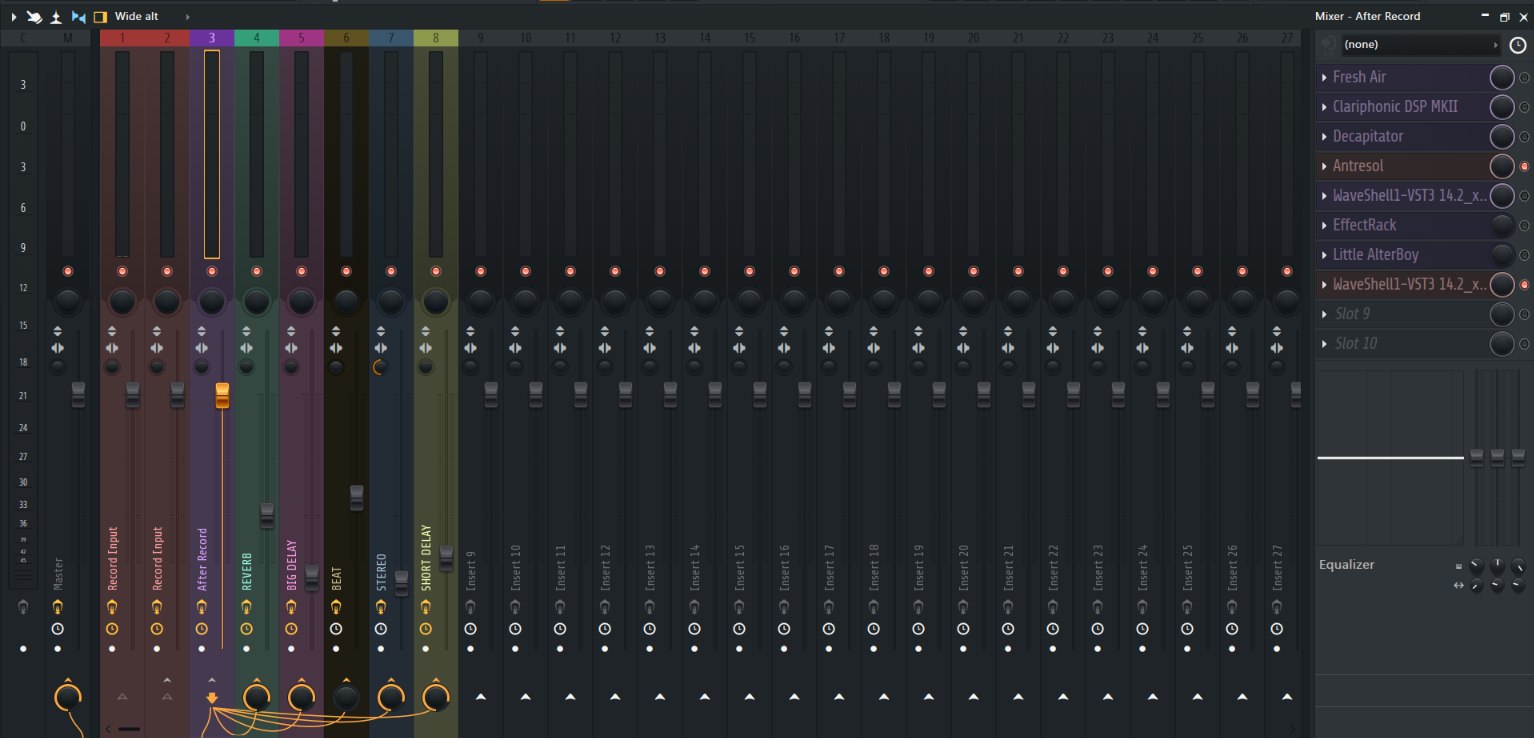
Every knob is set to about 80%. It sounds good on any voice the moment you open the template, so you can record without knowing a thing. The last 20% is yours: tune every plugin to your song, your voice and what you're making. Nothing in this chain is static, and nothing should be.
Every slot is a card. First what it does, in my words. Then the settings saved in the template (≈ means read from a knob position: start there and trust your ears), the knob to move first, and at the foot the swap: what to use if you don't own that plugin, cheaper, stock FL or free (prices in section 11).
Tags: Recording · Mix
The tags on each card: Recording slots stay on while you record; Mix slots get switched on for the mix. Where a move comes from an engineer, the card's text says who: Seth Firkins from his published session with Future, where my settings sit close to his screenshot; Atlanta engineers from their own interviews (section 12); Mike Dean, Travis Scott and Lil Baby from sessions I saw with my own eyes. Everything else is my own pick, set by my ear.
Your plugin versions will differ. That's fine: load your version, copy the numbers, then tweak by ear.
1. The story
Where this chain comes from
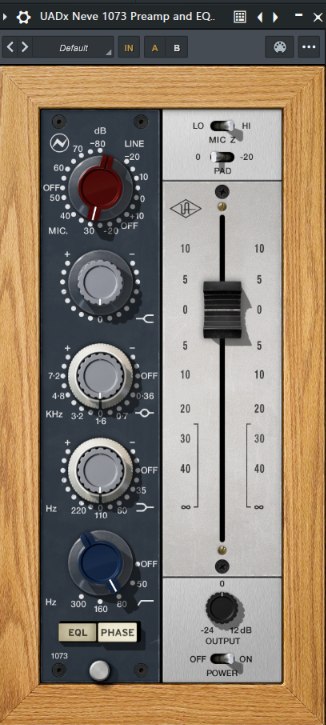
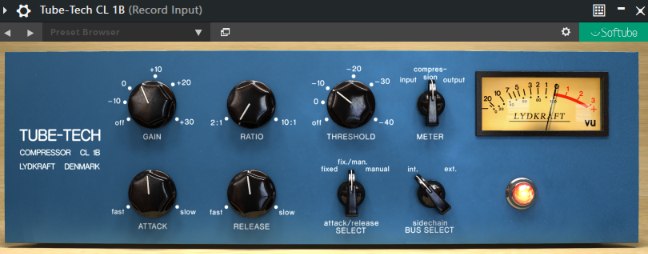
In May 2017, Sound On Sound's "Inside Track" column (Paul Tingen) took apart how engineer Seth Firkins recorded and mixed Future in Atlanta (read it here). His tracking chain was three pieces of hardware: a Neumann U87 Ai microphone into a Neve 1073 preamp into a Tube-Tech CL 1B compressor. They asked for exactly that in every studio, and went elsewhere when a studio didn't have it.
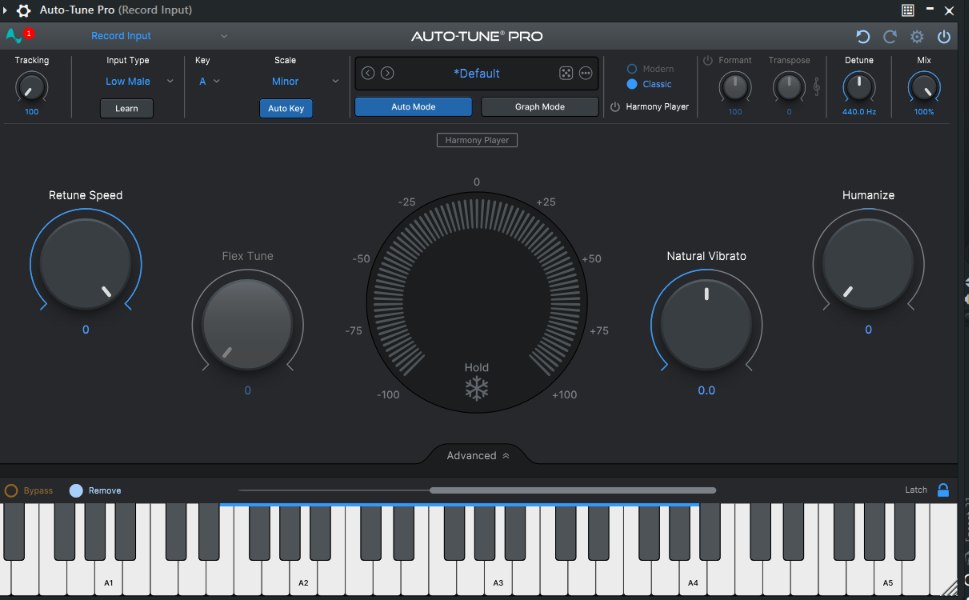
Future heard the finished sound while recording: Auto-Tune 5 on an aux in his headphones, then a delay and a light room reverb. The effects were printed afterwards. (Tracking ran in an older Pro Tools, because Auto-Tune 5 had no version for the new one.)
On each vocal track: McDSP's AC202 on Auto, riding the level with analog headroom, an opto compressor and a short modulated delay. On the vocal group, in order: an EQ (the lows shelved off, the top lifted) → a Waves De-Esser → the Waves Renaissance Compressor → a medium room reverb → a flanger for a slight wobble → a Waves L1 limiter last.
His session, on screen: the article prints a screenshot of Seth's own vocal chains with the plugin windows open: the AC202, the EQ, the de-esser, the Renaissance Compressor, the reverb, the flanger and the L1. Where my chain runs the same plugin, my settings sit close to that picture. And Seth explained each one: the EQ adds sibilance on purpose and the de-esser tames it, hitting only about once every ten words; the Renaissance Compressor smooths everything back down; the AC202 lifts the quieter parts of the performance and sweetens them; the L1 brings out the top end, so the vocal stands out a little more.
The workflow: bar by bar or section by section, no comping (no stitching a "best take" together later). In an interview with Red Bull Music Academy (August 2017), Seth added his rules: set the key in Auto-Tune, record strong but never too hot, keep the reverb light, put a delay on it, and let the artist work in two-line sections.
Not only Seth: other Atlanta engineers work the same way, and the cards link to them where they do. Tillie Mann, who mixed Lil Baby's My Turn, sends a vocal that feels too bright through a Tube-Tech CL-1B (Sound On Sound, June 2020). Kesha Lee (Lil Uzi Vert) records through a CL 1B too. The full list is in section 12.
Seth Firkins died in September 2017, at 36 (Wikipedia). His way of working still shapes how a whole generation of rappers records.
Atlanta-style tracking
Punch in line by line. The artist hears the finished sound while recording, so they leave the booth with a song, not a project.
My twist: FL records the raw vocal while you hear the whole chain. I record raw 99 percent of the time, so the key, the tuning and every plugin can still change after the take (section 4, "Raw or printed").
What this is, and what it isn't
What it is: my digital version of that chain, built over years, inspired by Future, Young Thug, Travis Scott and Drake, and by Seth Firkins' Sound On Sound interview. The analog rack lives on as plugins, plus the modern home-studio moves Seth didn't need in a real studio: noise control, more de-essing, a multiband sidechain on the beat.
What it isn't: a copy of anyone's session, or a product endorsed by anyone named here.
Not affiliated. The Ultimate Atlanta Vocal Chain is an independent product by Operator (SAN). It is not affiliated with, sponsored or endorsed by Future, Young Thug, Travis Scott, Drake, Lil Baby, Seth Firkins or his family, Mike Dean, any engineer named in these guides, Sound On Sound, or any plugin maker. Their names are used only to tell the true story of where the idea came from, and what I saw. All product names are trademarks of their owners.
2. The mirror
Seth's chain was three boxes in a real studio. Here is the same chain on a laptop, and the least you need to start. Prices: new, 30 October 2026, rounded. They move; the gap doesn't.
|
Seth's rack (analog) |
This chain (digital) |
The minimum |
| Mic |
Neumann U 87 Ai, ≈ $3,750 |
any mic |
any mic |
| Preamp |
Neve 1073 (today's AMS Neve 1073 DPA: ≈ $2,200–2,700) |
UADx Neve 1073, $299 list, often on sale |
your interface's preamp |
| Compressor |
Tube-Tech CL 1B, €3,990 (≈ $4,725) |
Softube Tube-Tech CL 1B Mk II, €199 |
Fruity Compressor (in FL), or a free one |
| Tuning |
Auto-Tune 5 |
Auto-Tune Pro, Classic mode |
Pitcher (FL Signature), or a free tuner |
| Interface |
a studio's Pro Tools rig |
an SSL 2+ or an Apollo (Apollo Solo: €598) |
an SSL 2 MkII: €214 |
| The rest |
a studio's outboard and Pro Tools plugins |
≈ 30 plugins (section 11) |
FL's own plugins + free ones (section 11) |
| Total |
≈ $10–11k for three boxes |
the same three jobs: a few hundred; the full chain: section 11 |
an interface, any mic, FL Producer |
Why the interface matters more than the mic. My rule: any mic, but at least an SSL 2 or SSL 2+, or an Apollo. A clean, quiet preamp and a stable low-latency driver let the whole recording chain run while you record, and the Neve plugin adds the color a hardware preamp would.
An Apollo is optional. The chain runs on native UADx plugins, so it works on any interface; an Apollo adds Unison preamps at the input and its own DSP for low-latency tracking.
Sources: Thomann Austria (CL 1B, SSL 2 MkII, Apollo Solo TB3 Heritage Edition), Sweetwater (U 87 Ai, CL 1B), Thomann US (1073 DPA), all read 30.10.2026.